The MSBM Summer School in Dubrovnik has been held since 2001 and offers an intensive five‑day immersion in the fundamentals and applications of modern mass spectrometry, taught by a world‑class international faculty. Designed for graduate students, postdocs, industrial scientists, and researchers entering the field, MSBM combines rigorous foundational teaching with hands‑on problem‑solving, application‑focused sessions, and exceptional access to experts. Increasingly adopted by companies as part of their internal training programmes, MSBM provides a uniquely efficient way to build deep, practical understanding of mass spectrometry while developing professional networks that last for years.

Further Information
The MSBM Summer School—held at the University of Zagreb’s Centre for Advanced Academic Studies in Dubrovnik—has become one of the most respected training events in the field. The event was first held in 2001 and has been running annually since 2012, and is now welcoming its 18th cohort.
In‑depth information about the syllabus can be found here. In summary, the first three days focus on the scientific and engineering fundamentals that underpin all mass spectrometry workflows: sample preparation, separations, ionisation sources, mass analysers, data processing, and complete system design. This foundation is then applied in the second half of the week to core application areas including proteomics, lipidomics, metabolomics, mass spectrometry imaging, and biologics analysis.
Teaching is delivered through a blend of lectures, workshops, tutorials, and evening problem‑solving sessions where students work directly with the faculty—an approach that deepens understanding while fostering communication, teamwork, and long‑term professional networks.
The compact format ensures unparalleled access to internationally recognised experts, and many alumni have gone on to collaborate with or be employed by MSBM faculty.
With several companies now using MSBM as part of their formal training pathways, the school offers both academic and industrial attendees a proven, efficient route to mastering the capabilities, limitations, and strategic value of modern mass spectrometry. If you would like to explore how the MSBM Summer School could support your organisation’s training needs, please email here.
School Venue
The MSBM Summer School is held in the Centre for Advanced Academic Studies (CAAS), just outside the old city walls of Dubrovnik, on the Adriatic coast.

The CAAS in Dubrovnik
The Centre for Advanced Academic Studies (CAAS) was founded by the University of Zagreb as a public academic institution for international scientific programs and postgraduate studies .
Dubrovnik
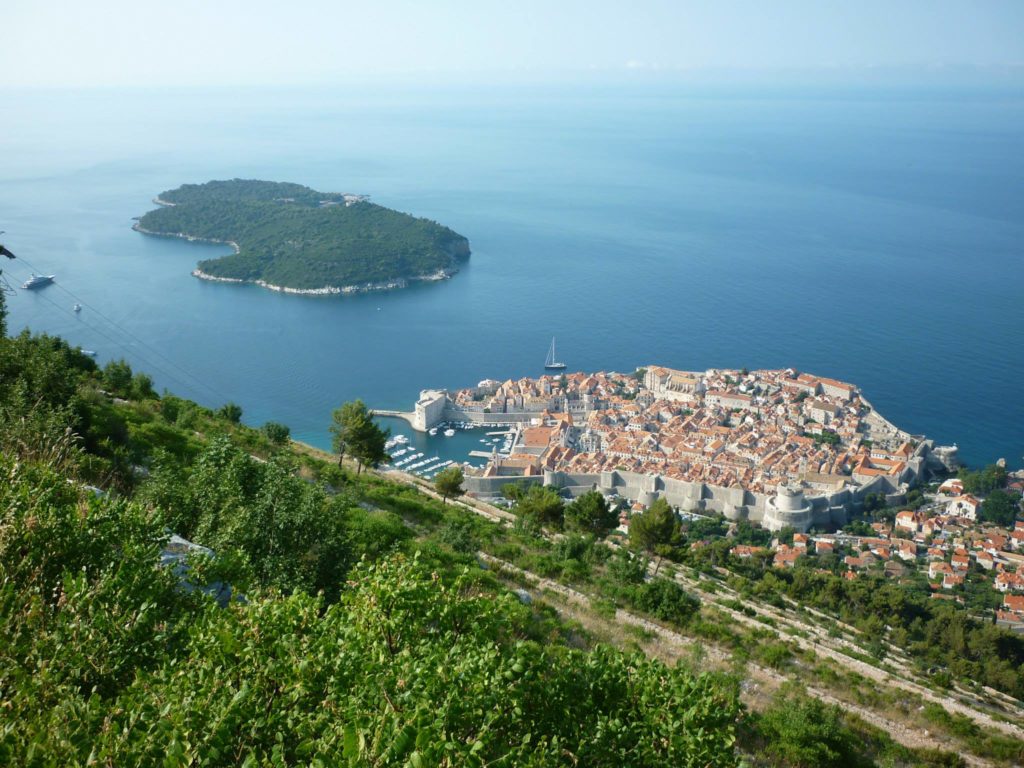
Dubrovnik is a historic city and famous tourist destination at the southern tip of the Republic of Croatia. Dubrovnik is rich in cultural and historical monuments and is included in UNESCO World Heritage List. Over the centuries it has become popular for its idyllic positioning on the coast in temperate waters and stunning views. More recently it is starting to build a name for its fusion of culture, food, climate, and mass spectrometry!
Currency
Croatia now uses the Euro. As exchange rates in hotels are usually poor wherever one travels, we advise to use banks, exchange offices & cash dispensers (ATM) which are available at the airport, bus terminal, at the ports to the Old City and many other locations in the city.

Climate
Classical Mediterranean; summers are hot and dry; July temperatures average around 28°C but can go up to 35°C. See Dubrovnik weather forecast.
Culture
The first Dubrovnik Summer Festival was held in 1950. Today, this open air festival is a premier international cultural event for theatre, dance and music.
Please visit the Dubrovnik Tourist Board web site where you can find cultural events updated on the daily basis.
Dining
Dubrovnik boasts over 60 restaurants blending a variety of culinary influences. Seafood is a top item offered with excellent local wines. Major credit cards are accepted.
There are also plenty of street food options – some international ones like pizza; and others that are more specifically Croatian, like burek.