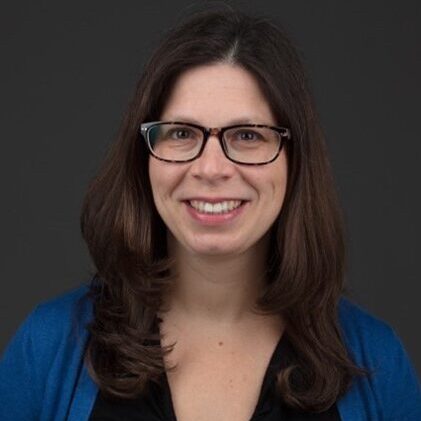
In 2026, we’re happy to be joined by Prof. Lekha Sleno, who is Professor of Bio-Analytical Chemistry at University of Quebec at Montreal, Canada.
Prof. Sleno’s work focuses on the development of new bioanalytical methods using advanced mass spectrometry for proteomics and metabolomics applications. The main objective of her research team is to discover the mechanisms related to xenobiotic-induced toxicities, metabolism and disease
Lekha will be teaching Tandem Mass Spectrometry and Introduction to Metabolomics at our 2026 event. So we could get to know Lekha a little ahead of MSBM 2026, I spoke with her about her mass spectrometry education, some of her work in proteomics, and what she’s looking forward to as a first-time attendee at MSBM:
Lekha we’re really looking forward to having you join us at MSBM this year, and having our students benefit from your knowledge and experience. Let’s run through a few questions so our students can get to know you a little in advance.
Q. What was your first experience of mass spectrometry in the classroom or lab?
Lekha: My first experience with mass spectrometry was during a co-op undergraduate work term in a pharmaceutical company where we were studying the metabolism of cortisol affected by different drugs. I was so impressed how much information the mass spec could give us for the structural elucidation of metabolites and for measuring the rates of metabolism affected by the different drugs that we were testing.
Q. How did you learn mass spectrometry initially? Was it in a class setting? Through a job in industry? As a PhD student?
Lehka: During my co-op work terms in pharma, I was able to spend a lot of time learning about the technology and how to use the mass spectrometer independently for my own project. I also remember sitting with the senior scientists who were using different instruments and being able to ask them so many questions where I learnt many more possible applications of mass spectrometry.
I also had a professor early on who recognized my interest in mass spec during my work terms and encouraged me to take her mass spec grad level course as an undergrad. In that class, I learned a lot of the fundamentals and theory behind the technology.
Q. Is there a particular person or event which you’d highlight that you learnt mass spectrometry from?
Lehka: Two main people come to mind during my early days with mass spectrometry. During my work terms, Kevin Bateman at Merck Frosst was the head of the mass spec group back then. We had many conversations about mass spec and when it came time for me to decide to go to grad school, he helped me find the best choice for what I wanted to learn more about.
At university during my undergrad degree, Ann English was my analytical chemistry professor at Concordia University for several classes, including that mass spec course. She was also my honor’s research project supervisor. In her lab, I used mass spec for the first time to measure intact protein spectra and detect modifications related to oxidative stress. I remember the big lesson I learned during that project was that the mass spec never lies and even when you anticipate seeing a specific result, the instrument reveals what is really there. I repeat this to my students regularly!
My PhD supervisor, Dietrich Volmer, was the easily the most critical person in my journey as a student and early career researcher. During my thesis, I used mass spectrometry to elucidate the structures and quantify biologically-relevant small molecules in complex samples. Outside of my own research projects, I was also fortunate enough to be involved in instrument demos at different vendor sites. This was a unique opportunity for a PhD student!
I was very fortunate that each of these people were very generous with their time and made me feel very comfortable asking any questions that came to mind. They shared their knowledge as well as their passion for mass spectrometry, as I aim to do with my students now.
Q. So, I listened to your episode of The Proteomics Show recently, where you talk about your work on the proteomics of tears. I’d say this isn’t the first biological fluid most people think of for analysis, so what drew you to the analysis of tears?
Lehka: Studying tears in my lab came about from the combination of a few things. I was approached by a company that was interested in looking at “biomarkers” in tears that could help decipher people with dry eye disease and track if their treatment was influencing these biomarkers. It was the first time I had thought about measuring tears by mass spectrometry and started looking at literature involving tear proteomics. I then connected with a cornea specialist who happened to be married to a colleague of mine, and we decided to start collaborating together to look for protein biomarkers of eye diseases.
Q. What are the biggest analytical challenges when working with tears compared to more conventional biofluids?
Lehka: Tears are quite easy to collect, and it is less invasive than a blood test. However, it is very important to limit any contamination of the sample during collection that can negatively affect our results.
Another challenge is dealing with the variability of volume collected since it is difficult to quantify the amount of protein collected on Schirmer strips prior to digestion. Normalization during data processing can help overcome this limitation but variable digestion conditions can still affect our results.
Q. What concept in mass spectrometry do you find easiest and ‘click’ for you? Are there any that you find harder and bring you to tears? (Excuse the pun!)
Lehka: All concepts in mass spectrometry are important to keep in mind, since so many things can affect your analysis, from how the sample is collected and prepared to the instrumental conditions, as well as how the data is processed. It is a real challenge to ensure that nothing is affecting your results negatively. We end up having to troubleshoot more than most people would think (especially non-mass spectrometrists!). But it is so exciting to have worked through a problem that results in a much better analysis. Getting reliable results on such complex instrumentation is a real science…
Q. What do you hope students take away from your upcoming talks at MSBM?
Lehka: I hope students will come out with is a ton of new knowledge about mass spectrometry and all its possibilities. I am sure they will be impressed with diversity of expertise that they can get access to through this unique program. From what I hear it is an amazing experience! I am very much looking forward to interacting with the students and faculty over the week.
Q. Our faculty and organising committee often leave MSBM saying they learnt a lot too. Looking ahead at the program, is there something which you’re looking forward to learning about at MSBM?
Lehka: I’m sure I will learn a ton! I’m ready to soak it all in (and a good amount of sun too). Having a group of scientists coming together with a passion for learning and teaching in such a beautiful setting will be such a treat.
Q. What advice would you give to someone attending a summer school like MSBM for the first time?
Lehka: My only advice would be to come with an open mind to learn as much as possible and have many conversations and interactions with fellow students and faculty.
Q. Have you been to Dubrovnik or Croatia before? If so, how was it and what would you recommend? If not, is there something you’re looking forward to seeing or experiencing?
Lehka: This will be my first time in Croatia and I am so excited! I am really look forward to being on the Adriatic sea and seeing the culture of Dubrovnik
Q. On the Wednesday of MSBM, we have a Faculty vs Students Volleyball match on Lokrum Island. So, last question – How are your Volleyball skills?
Lehka: Not great… Haven’t played volleyball since high school gym class and don’t remember being that good. I will do some good cheering though!
MSBM will run from the 5th to the 10th July 2026 this year, hosted in the UNESCO World Heritage City of Dubrovnik, Croatia. It’s an excellent opportunity to experience a crash course in Mass Spectrometry Fundamentals & Applications, meet with industrial experts and vendors, and build your network with peers and faculty. You’ll learn from Prof. Sleno, as well as the rest of our 2026 Faculty and Organising Committee.
Registration for MSBM 2026 is still open, so make sure you secure your spot before it’s too late!
Got any questions? Check out our Frequently Asked Questions (FAQ) page or contact the team at [email protected]
0 Comments